
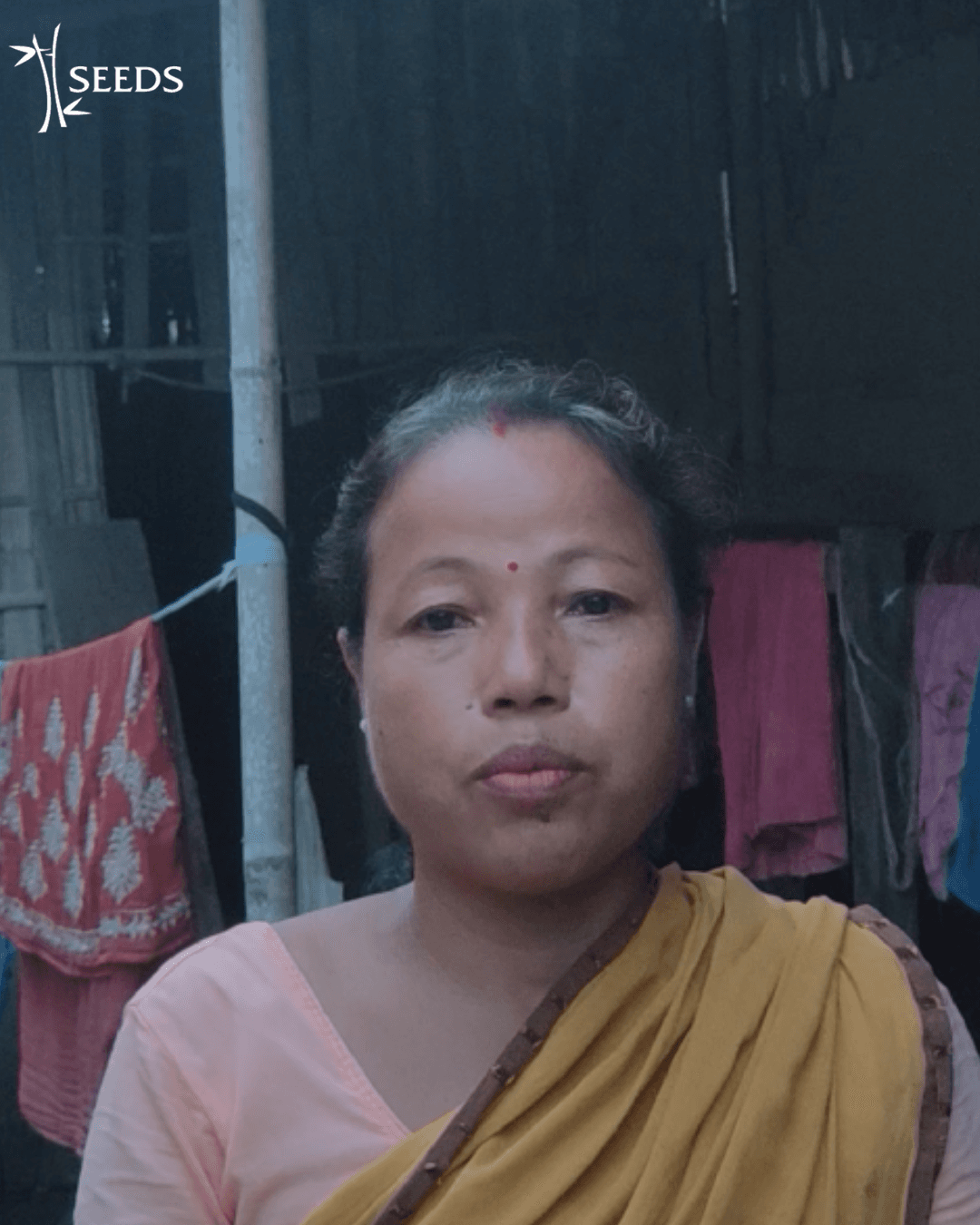
A Kitchen Lost to the Floods: Nirupa Morang’s Family Begins to Rebuild
Assam
Before the floods, Nirupa Morang and her husband, Baneswar, worked together to keep their household running. Baneswar earned approximately ₹7,000–₹8,000 a month through daily-wage labour, while Nirupa managed the home, cared for their two children and looked after the family’s poultry and goats. Their livestock provided an additional source of livelihood, helping them manage everyday expenses alongside Baneswar’s earnings.
Their home was where these everyday routines came together. It was where meals were prepared, their children were cared for and the family made the most of what they had. Although their income was modest, their home and livestock helped them manage daily life.
The July 2026 floods damaged the family’s bamboo house and completely destroyed their kitchen. Their poultry and goats were washed away, taking with them an important source of livelihood. The family also lost essential belongings, including beds, furniture, cooking utensils, clothes, bedding, food stocks, electrical appliances and school materials.
The damage to the kitchen changed one of the family’s most basic daily routines. A place once used to prepare meals was no longer usable, and part of the house was left in a precarious condition.
“Kitchen was completely damaged. One wall is standing with support of bamboo post. Now, we are cooking in the chang ghar,” Nirupa says.
Although Nirupa and her family have returned home, their lives have not returned to normal. The kitchen remains destroyed, and one wall of the bamboo house is still supported by a bamboo post. The family now cooks in the chang ghar, the raised section of their home, instead of their usual cooking space.
The loss of their poultry and goats has also weakened their livelihood. Baneswar continues to earn through daily-wage work, but his income is limited, and the family can meet its everyday expenses only partially. Replacing the livestock and household essentials lost in the floods is difficult with their current resources.
Relief assistance from SEEDS and other organisations, including food, household items, a hygiene kit and a utensil kit, has helped the family meet some immediate needs. However, gaps remain in access to safe drinking water and sanitation. According to the assessment, the children’s education has also been disrupted.
For Nirupa, the challenge is to keep family life going while the spaces and resources that once supported it are gradually rebuilt. Cooking, caring for the children and managing household expenses now require the family to make do with what remains.
Nirupa and Baneswar are continuing to manage their household with the resources available to them. Baneswar’s daily-wage work provides some income, while Nirupa continues to care for their children and manage daily responsibilities. But their efforts alone cannot replace the livestock they lost or make the damaged house safe and functional again.
Their recovery begins with restoring the essentials of home life. Repairing the damaged bamboo structure would help improve the family’s safety, while rebuilding the kitchen would give them a more suitable place to prepare meals. Support for safe drinking water, sanitation, household essentials and replacement livestock could also help them regain stability.
Your support can help Nirupa’s family rebuild a safer home, restore their kitchen and regain the stability they need to move forward.
DONATE NOW
Indicative Recovery Requirement
Based on an initial indicative assessment, Mamoni's recovery requirement could be around ₹1,60,000. Around ₹70,000 is indicated for repairing of bamboo house, durable rebuild. A further ₹30,000 is indicated for replacing the domestic animals lost, based on a typical small mixed holding for the area, to be confirmed through field verification. ₹20,000 is set aside for household utensils and essential items, and ₹40,000 for continued sanitation and drinking water support during the recovery period.
Note: Recovery requirements and costs are indicative and subject to field and technical verification. Support will be prioritised according to assessed household needs.