
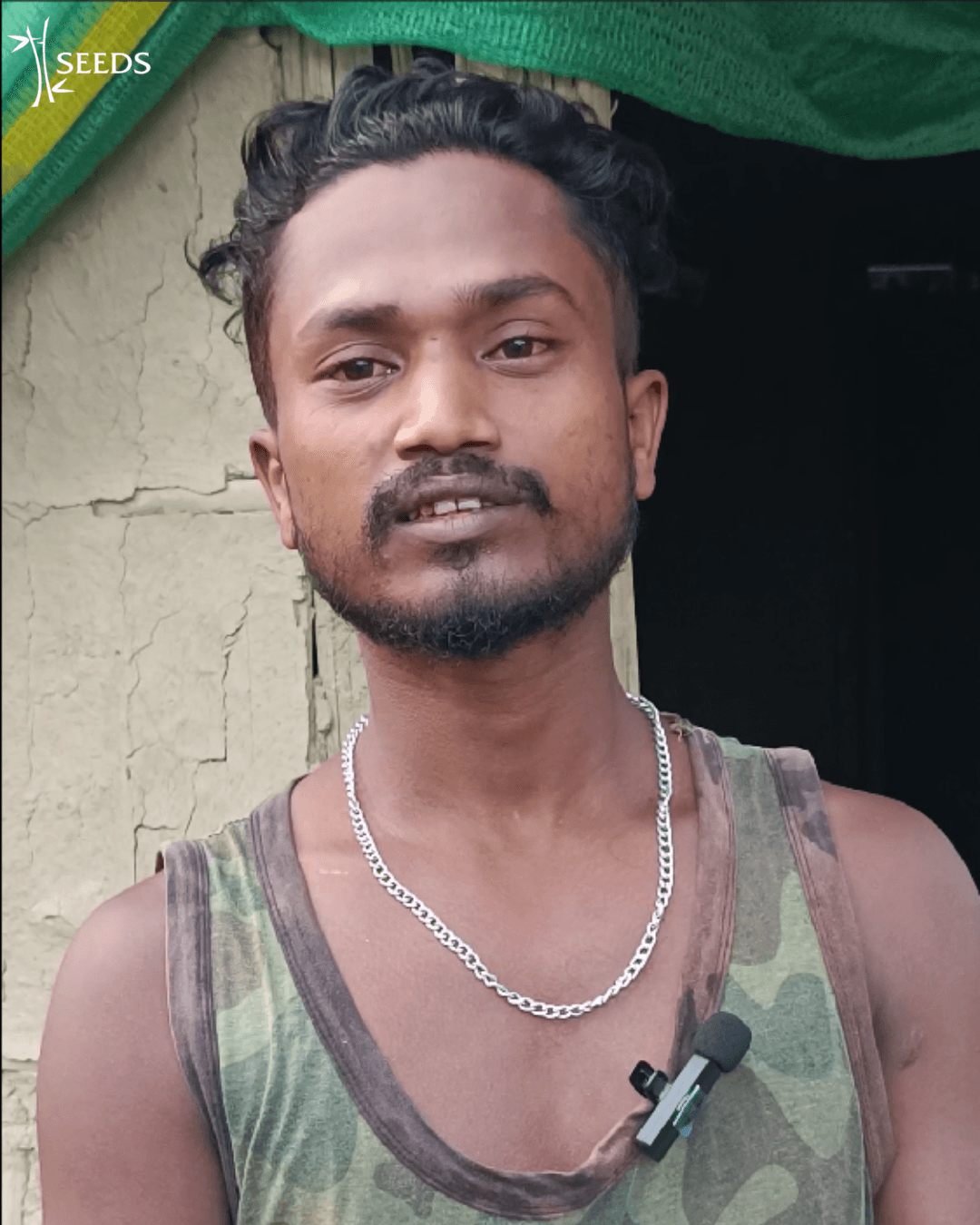
Assam Floods Contaminated Well: A Story of Milrat Guria
Chutia Basti, Nazira, Sivasagar, Assam
Before the floods, Milrat Guria and his wife Neha Guria worked as daily wage labourers in a tea garden, earning a combined income of approximately ₹7,000–8,000 per month. They also kept poultry and a goat, which provided additional support for their household. Living with their young child in a bamboo house in Chutia Basti, the couple relied on their earnings and livestock to manage everyday expenses.
Their household also depended on a mud well that served as the only water source in the neighbourhood. Although their resources were modest, access to water close to home helped them manage their daily routines.
The floods partially damaged the family’s bamboo house and washed away their poultry and goat. Beds, furniture, cooking utensils, clothes, bedding, food stocks, electrical appliances and other household essentials were also lost.
The floodwaters also entered the neighbourhood’s mud well, contaminating its water and making it unsafe to use. With their primary water source no longer usable, the family was left facing another challenge alongside the damage to their home and the loss of their livestock.
Milrat and Neha continue to live in their partially damaged bamboo house. Although they have access to food, markets and transportation, collecting safe drinking water has become part of their daily struggle.
The couple now walks approximately one kilometre to collect water from the tea garden. This added journey places a further burden on a family already trying to manage with limited resources after the floods.
While both continue to work in the tea garden, the loss of their livestock has removed an additional source of household support. The family also lacks adequate sanitation facilities.
Relief assistance from SEEDS and other organisations, including food, household items, hygiene kits and utensil kits, has helped the family meet some immediate needs. However, reliable water access, sanitation, shelter repairs and livelihood recovery remain important priorities.
Neha w/o Milrat Guria shares:
“Our mud well was the only water source in the neighbourhood. Flood water entered the well and contaminated the water. Now, we have walk long distance to collect drinking water.”
Milrat and Neha continue to work in the tea garden while managing their household with the resources available to them. They hope to repair their home, replace their lost livestock and restore greater stability for their family.
Reliable access to safe drinking water is another essential part of their recovery. Restoring a safe water source closer to home would reduce the need for the daily walk and make it easier to manage cooking, drinking and household hygiene. Improved sanitation, essential household items and livestock replacement would further help the family regain security and independence.
Over the next three to six months, the family hopes to make their home safer and rebuild the resources they need for everyday life.
Together, Let’s Help Milrat Rebuild
For Milrat’s family, recovery means more than repairing a damaged house. It means being able to access safe water without a long daily walk, restore lost livelihood assets and rebuild a home where everyday life can become more secure.
DONATE NOW
Your contribution will support SEEDS’ flood response and recovery efforts for affected families based on assessed needs.
Indicative Recovery Requirement
Based on an initial indicative assessment, Milret's recovery requirement could be around ₹1,40,000. Around ₹70,000 is indicated for rebuilding a permanent house, durable rebuild. A further ₹20,000 is indicated for replacing the domestic animals lost, based on a typical small mixed holding for the area, to be confirmed through field verification. ₹20,000 is set aside for household utensils and essential items, and ₹30,000 for continued sanitation and drinking water support during the recovery period.
Note: Recovery requirements and costs are indicative and subject to field and technical verification. Support will be prioritised according to assessed household needs.