
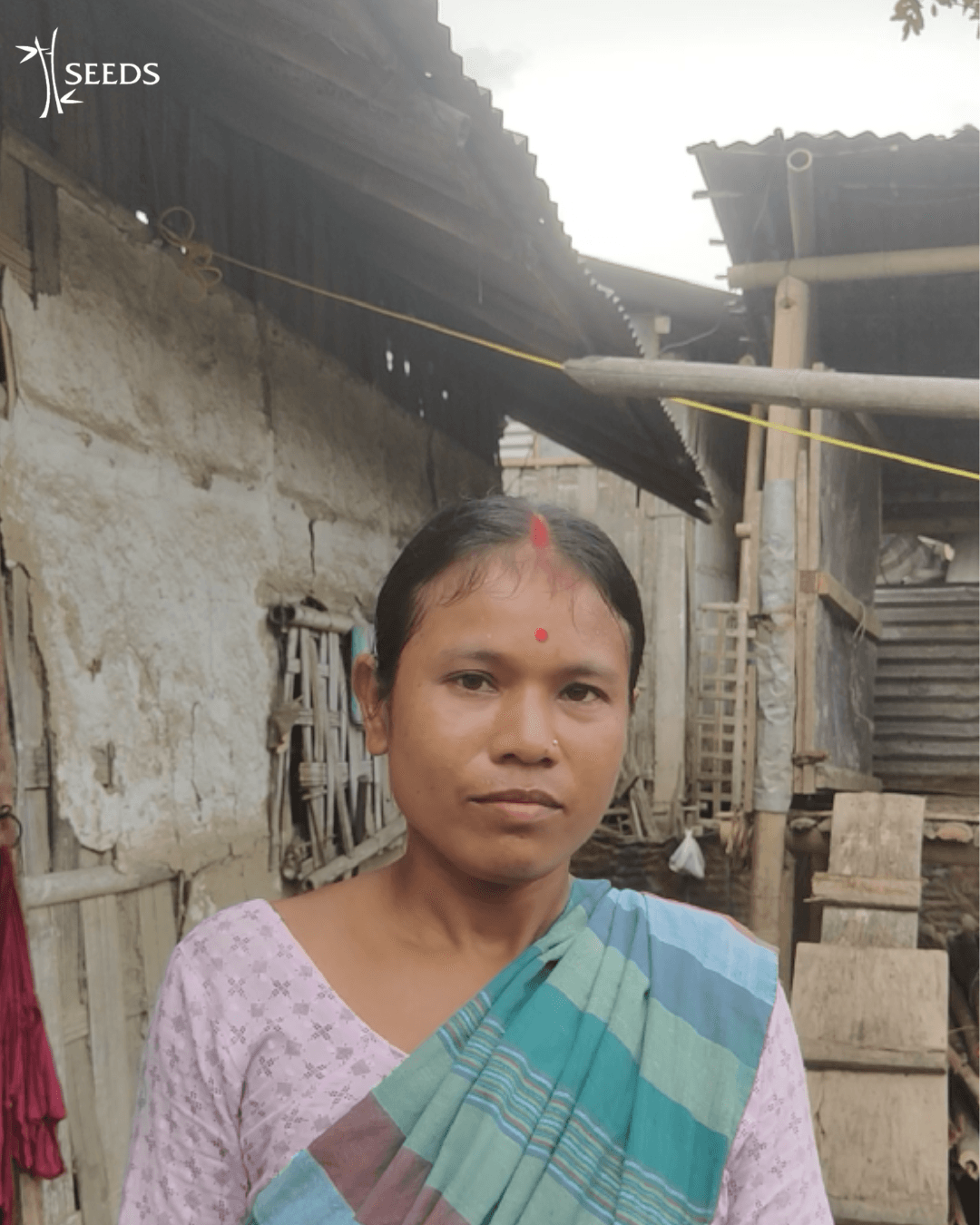
Help Gitanjali Rebuild Her Home After Assam Floods 2026
Santak Bor Miching Gaon, Nazira Block, Sivasagar District, Assam
Before the floods, Gitanjali Morang and her family relied on her husband’s driving work and the livestock they raised to make ends meet. Nitul Morang, 35, earned approximately ₹8,000–₹9,000 a month as a driver, helping the family manage its daily expenses. Their cow, goat and poultry provided an additional source of livelihood. While Nitul went out to work, Gitanjali looked after their home, cared for the animals and raised their child. Life depended on the income they earned and the home they had built together.
Heavy rainfall changed the family’s life in a matter of days. Floodwater entered their bamboo house, leaving them unable to stay there. The disruption affected their health, too. As Gitanjali recalls, both she and her child fell ill during the floods.
The family lost its livestock, including its cow and goat, along with poultry. Their animal shed was damaged, and essential household belongings were lost.
With their home no longer safe to live in, Gitanjali, Nitul and their child had to leave. They took shelter in a neighbour’s chang ghar and stayed there for almost 15 days.
Those days away from home marked the beginning of a difficult recovery. When the family eventually returned, its bamboo house was still partially damaged, and many of the things that had supported their everyday lives were gone.
Returning home has not meant returning to the life the family knew before. Nitul has not resumed his driving work since the floods and is currently relying on daily-wage work. Without his regular income or the livestock that once supported the household, meeting everyday expenses has become more difficult.
The family is also managing with fewer belongings and limited access to safe drinking water and sanitation. Relief supplies from SEEDS and other organisations, including food, household essentials, hygiene items and utensils, have helped them meet some immediate needs. But these supplies cannot replace a steady income, a secure home or the livelihood they lost.
“We are just managing somehow, and right now, life is very difficult without a job,” Gitanjali says.
Gitanjali is looking for ways to contribute to the household income. Each day brings the challenge of balancing immediate needs with the longer task of rebuilding what the floods took away.
She is not waiting for circumstances to improve on their own. She has started a small shop, buying chana (gram) and biscuits to sell. It is a modest source of income, but one that gives her a way to contribute while Nitul’s regular work remains interrupted.
The family is also trying to recover its lost livelihood, though replacing livestock and repairing their damaged home will take resources they do not currently have. Their priorities are practical and closely connected: a safer place to live, access to clean drinking water and sanitation, essential household belongings and a more reliable means of earning.
The small shop is one step towards that future. With the right support, the family can build on these efforts and gradually restore the security that once came from having a home, an income and the means to care for one another.
Together, Let’s Help Gitanjali Rebuild.
DONATE NOW
Your contribution will support SEEDS’ flood response and recovery efforts for affected families based on assessed needs.
Indicative Recovery Requirement
Based on an initial indicative assessment, Gitanjali's recovery requirement could be around ₹1,60,000. Around ₹70,000 is indicated for repairing a bamboo house, durable rebuild. A further ₹30,000 is indicated for replacing the domestic animals lost, based on a typical small mixed holding for the area, to be confirmed through field verification. ₹20,000 is set aside for household utensils and essential items, and ₹40,000 for continued sanitation and drinking water support during the recovery period.
Note: Recovery requirements and costs are indicative and subject to field and technical verification. Support will be prioritised according to assessed household needs.