
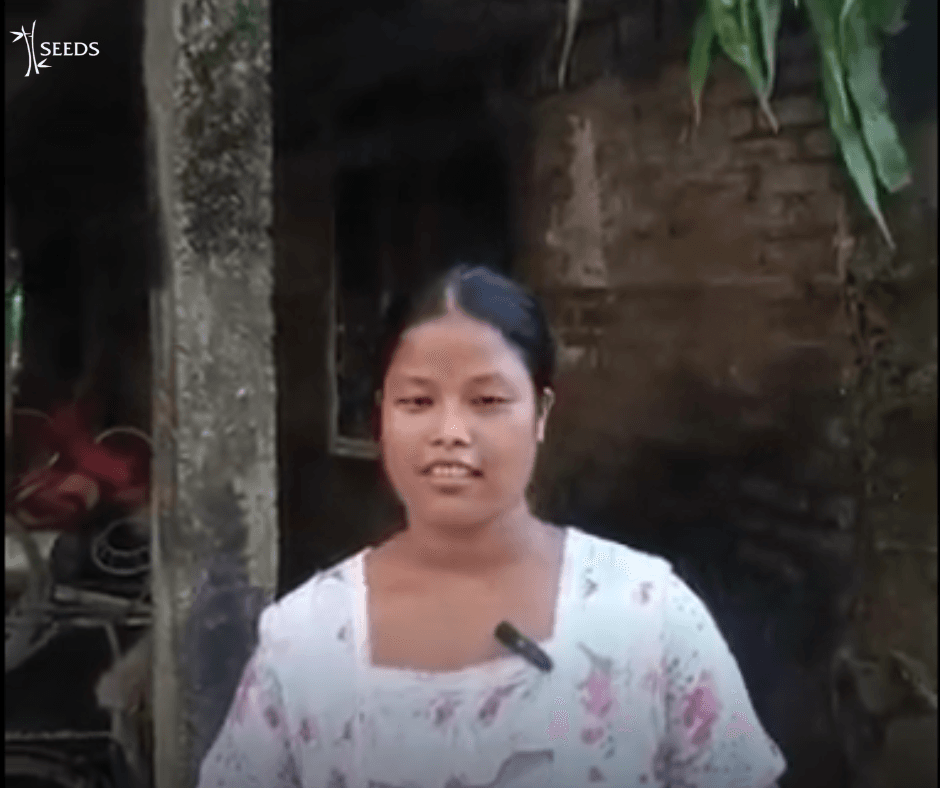
When the Waters Receded, Mina’s Family Was Left to Rebuild a Livelihood
Saura Basti, Nazira Development Block, Sivasagar District, Assam
Mina Pegu, 23, lives with her family in Saura Basti, Nazira Development Block, Sivasagar district. There are five members in the household, including four adults and one child. The family also looks after two elderly women.
Mina’s husband, Bhaskar Pegu, 25, works as a driver and is the family’s main source of income. Before the floods, the family also earned from poultry farming and paddy cultivation. Together, these sources brought in around ₹8,000–₹12,000 a month.
The family has received some immediate relief, which has helped them manage their basic needs for now. But with these supplies running out, they are thinking about how to rebuild the livelihoods that supported their family.
As Mina puts it,
“Now we are just wondering what to eat and how to get by.”
She also mentioned,
"The floodwaters broke our farm. We suffered a heavy loss; our cattle, goats and chickens were all lost. Now we are somehow managing; we received a little relief aid and are managing with that. The paddy stored in the granary was also ruined. We cultivated about 5 bighas of land, and that too was washed away by the flood. The chickens we raised for about a week were also lost. Now we are just wondering what to eat and how to get by."
When Livelihoods Were Washed Away
Before the flood, Mina’s family depended on a combination of agricultural and livestock-based activities. Paddy cultivation and poultry were part of their livelihood, while livestock provided an additional source of food and economic security.
The flood disrupted these sources at once.
For a family that depended on agriculture and livestock, these were not simply physical losses. They were productive assets that supported everyday life and could have helped the family manage future expenses.
Relief Has Helped. Recovery Needs More.
The family has received some immediate relief assistance, which has helped them manage in the aftermath of the flood. But relief can address immediate needs; rebuilding a livelihood requires restoring the assets that families depend on to earn and produce food.
For Mina’s family, recovery means restoring livestock, rebuilding poultry activities and supporting the return of agricultural production. Re-establishing these sources of livelihood can help the family regain greater stability and reduce the uncertainty they are facing today.
From Loss Towards Recovery
The flood has left Mina’s family with fewer resources to depend on. Their recovery will require more than replacing what was lost. It will mean rebuilding the productive base that allowed the family to support itself before the disaster.
Restoring livestock and poultry can provide the family with productive assets again, while agricultural support can help them resume cultivation. Together, these steps can help rebuild a more secure and diversified livelihood.
Indicative Recovery Requirement
Based on an initial indicative assessment, Mina's recovery requirement could be around ₹1,40,000. Around ₹1,00,000 is indicated for replacing the domestic animals lost, based on a typical small mixed holding for the area, to be confirmed through field verification. ₹40,000 for continued sanitation and drinking water support during the recovery period.
Recovery requirements and costs are indicative and subject to field and technical verification. Support will be prioritised according to assessed household needs.
Together, Let’s Help Gulu Ali Rebuild
A flood can change a family’s everyday life in a matter of hours. Recovery begins with restoring the essentials.
Your contribution can support Mina and her family as they rebuild their homes, restore essential resources and take the next steps towards recovery with safety and dignity.
DONATE NOW
Your contribution will support SEEDS’ flood response and recovery efforts for affected families based on assessed needs