
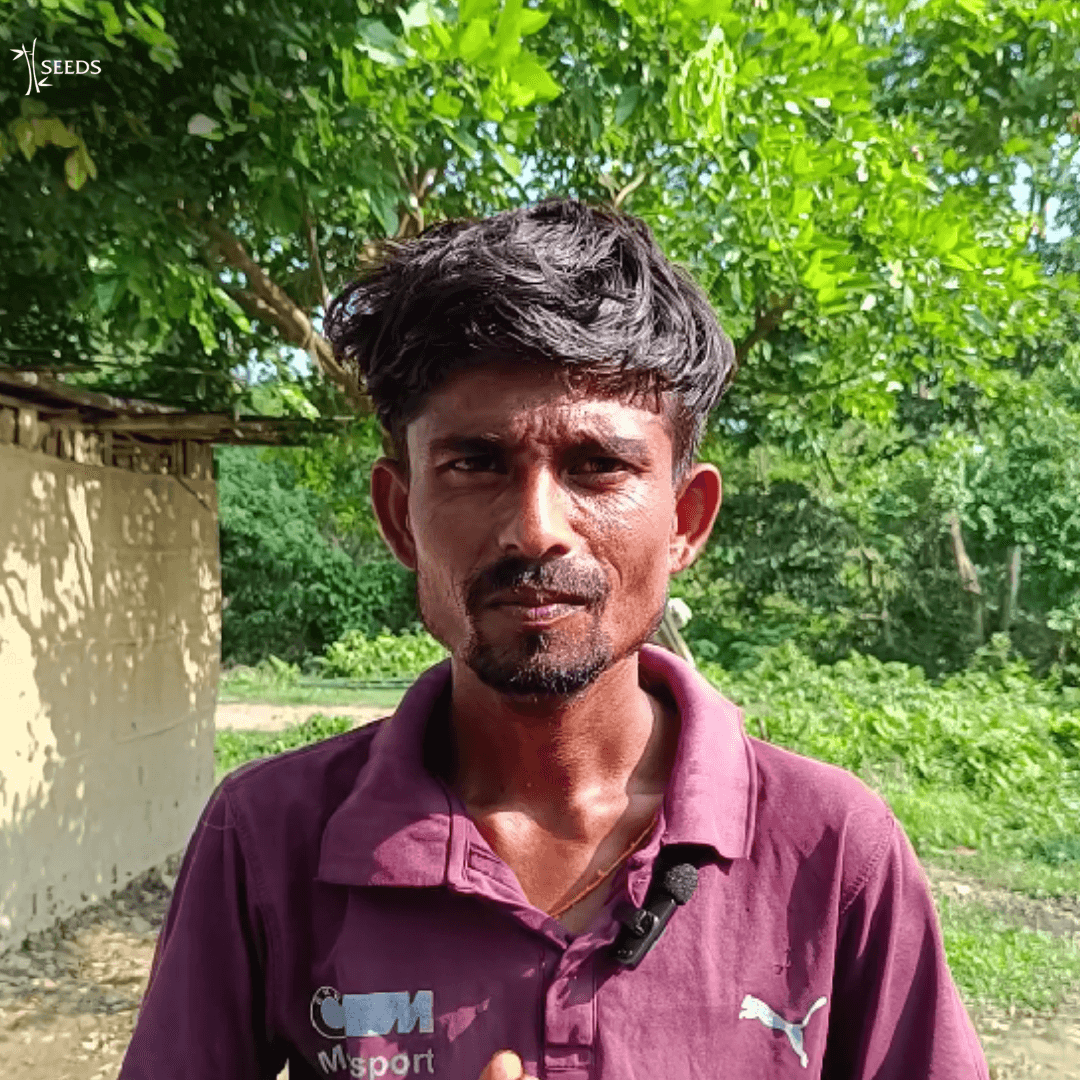
Winter Approaching, but No Safe Place to Cook: Sanju Gowala’s Rebuilds After the Flood
Gohain Bari, Nazira, Sivasagar, Assam
Before the floods, Sanju Gowala and her husband, Pari Gowala, 27, worked as daily wage labourers in a tea garden, earning a combined income of approximately ₹7,000–8,000 per month. They also kept poultry and a goat, which provided additional support for their household. Their two daughters attended school, and the family managed its daily needs through their earnings and livestock.
The family lived in a bamboo house in Gohain Bari, a low-lying area close to the Dikhow River. The floods completely destroyed their home and washed away their poultry and goat, taking away an important source of household support.
They also lost essential belongings, including beds, furniture, cooking utensils, clothes, bedding, food stocks, electrical appliances, school materials and other household necessities. Rebuilding their home and replacing these assets has become a major challenge for the family.
Sanju and her family now live in a makeshift shelter in Gohain Bari. Their cooking space, covered with GI sheets, offers limited protection from the elements. With winter approaching, preparing meals for their children has become a particular concern.
“We survived the flood. But life become extremely difficult. Everything was washed away. Winter is approaching and we do not have a safe place to cook food for our children,” Sanju says.
Although Sanju and Pari continue to earn some income through daily wage work in the tea garden, the loss of their livestock has reduced the resources they once relied on. Their temporary shelter and the loss of household essentials make it difficult to return to their previous routines.
Sanju and Pari continue to work and manage their family’s needs with the resources available to them. They have also received food, household items, hygiene kits and utensil kits from SEEDS and other organisations, which have helped them meet some immediate needs.
However, rebuilding their home remains a priority. A safe shelter and functional cooking space would help the family resume daily routines and provide their daughters with a more secure environment. Replacing the lost livestock could also restore an additional source of household support, while sanitation facilities and essential household items would help address other recovery needs.
With timely support for shelter reconstruction, sanitation, essential household items and livestock replacement, Sanju’s family can move beyond temporary arrangements towards a safer home and a more secure livelihood.
Together, Let’s Help Sanju Rebuild
DONATE NOW
Your contribution will support SEEDS’ flood response and recovery efforts for affected families based on assessed needs.
Indicative Recovery Requirement
Based on an initial indicative assessment, Sanju's recovery requirement could be around ₹2,10,000. Around ₹1,20,000 is indicated for rebuilding a permanent house, durable rebuild. A further ₹30,000 is indicated for replacing the domestic animals lost, based on a typical small mixed holding for the area, to be confirmed through field verification. ₹20,000 is set aside for household utensils and essential items, and ₹40,000 for continued sanitation and drinking water support during the recovery period.
Recovery requirements and costs are indicative and subject to field and technical verification. Support will be prioritised according to assessed household needs.